Spiderman Art Thief, Musée d’Art Moderne in Paris, France 2010
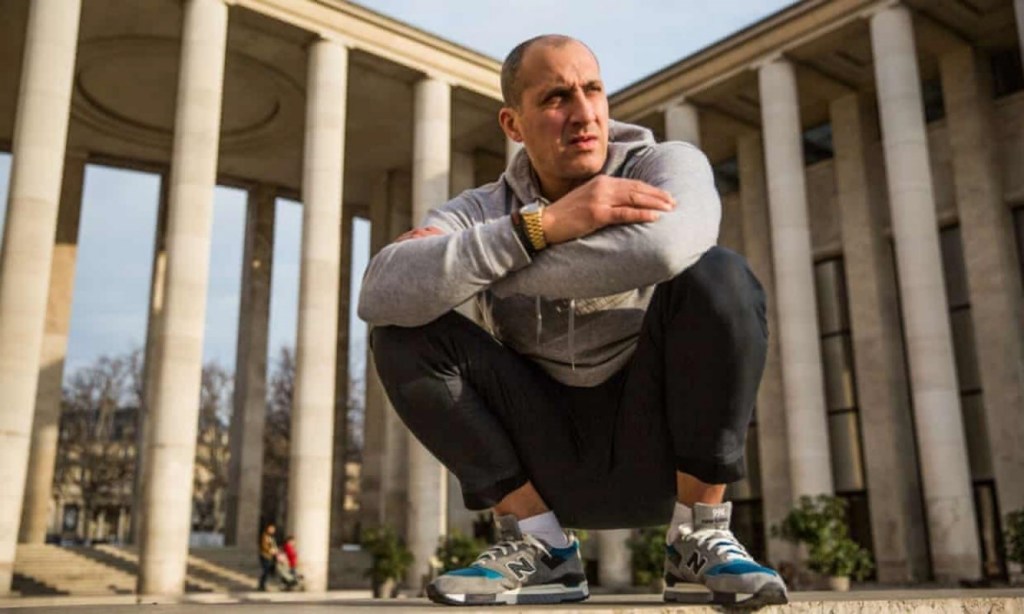
VJERAN TOMIC, AKA, THE SPIDER-MAN
You know you’ve made it as a criminal when the media gives you a nickname. For skilled climber and thief Vjeran Tomic, ‘Spider-Man’ was an apt nickname for someone who spent his childhood in Père Lachaise scaling gravestones and cemetery walls with his friends in preparation to rob apartment buildings. Describing his way of stealing as ‘intuitive,’ Tomic’s first heist was at age 10 when he broke into a library in Mostar by climbing through a window that was nearly ten feet above street level, taking two several hundred-year-old books.
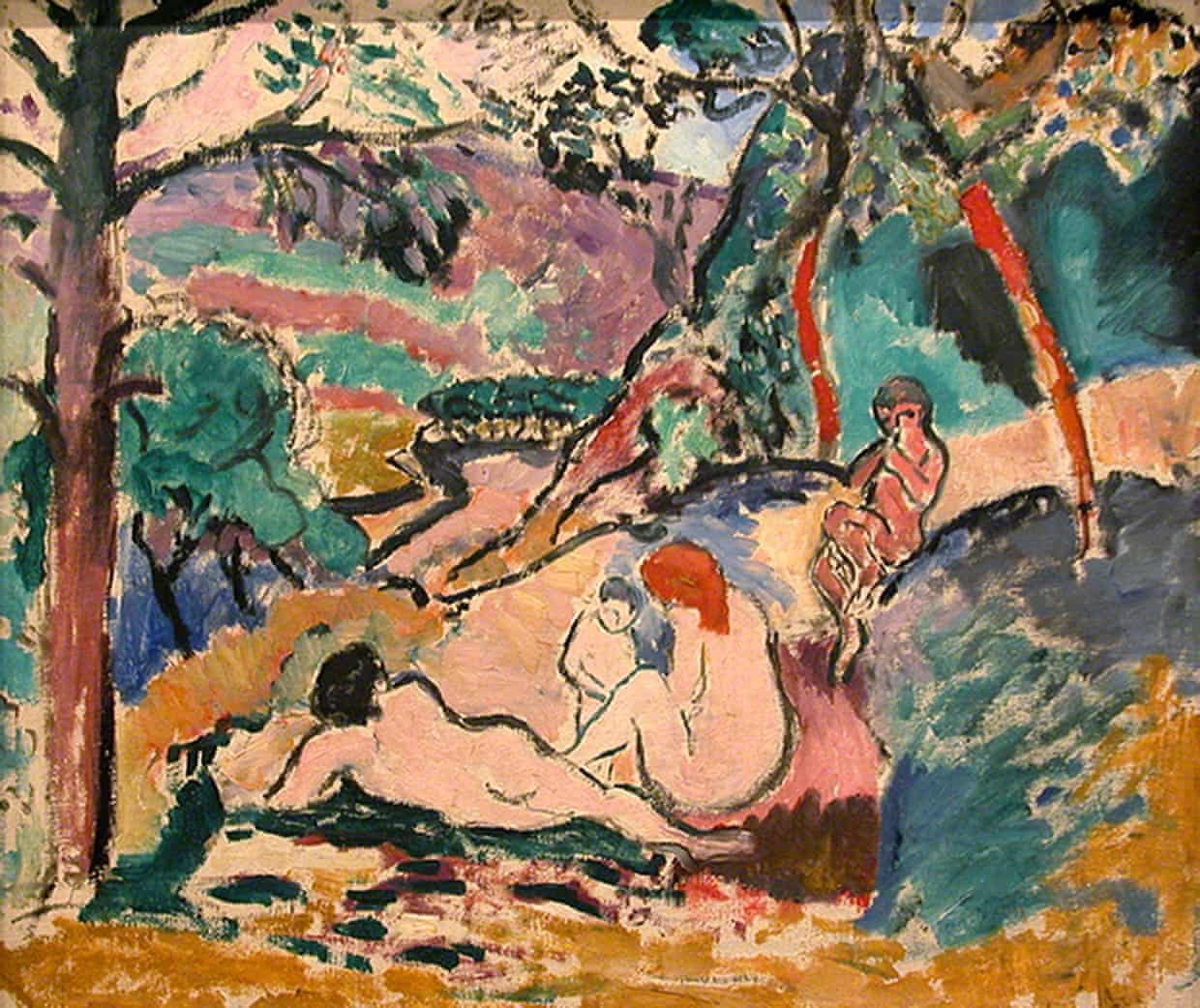
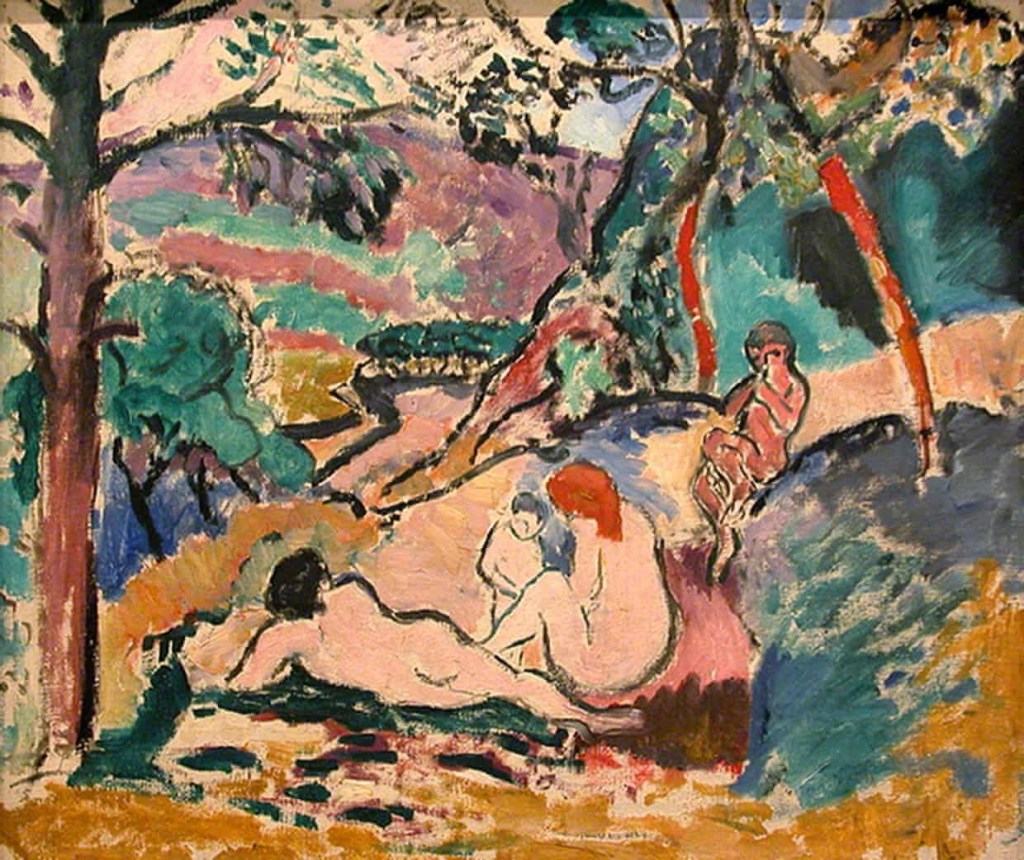
ONE OF SPIDERMAN’S HAUL: MATISSE’S ‘PASTORAL’, 1905.
At age 49, he pulled off his generation’s biggest art heist. It was Tomic’s spiritual connection to fine art that eventually led him to this robbery, entering a manic state that made him swipe a Matisse, a Picasso, a Braque, a Léger, and a Modigliani from the Musée d’Art Moderne in 2010. On May 14th, Tomic began working on a window of the museum, using a black sheet of cloth as a curtain, a task that took six nights—why rush, right? Then in the early morning of May 20th, he entered the museum, leaving briefly to see if the alarms would go off (alarms that had been waiting to be fixed for several weeks at the time), then returned. Originally intending to take just one painting, he ended up leaving with five worth more than €100 million. Tomic was arrested in May 2011 and jailed for eight years. As for the paintings, they’re still missing and are thought to have been destroyed.
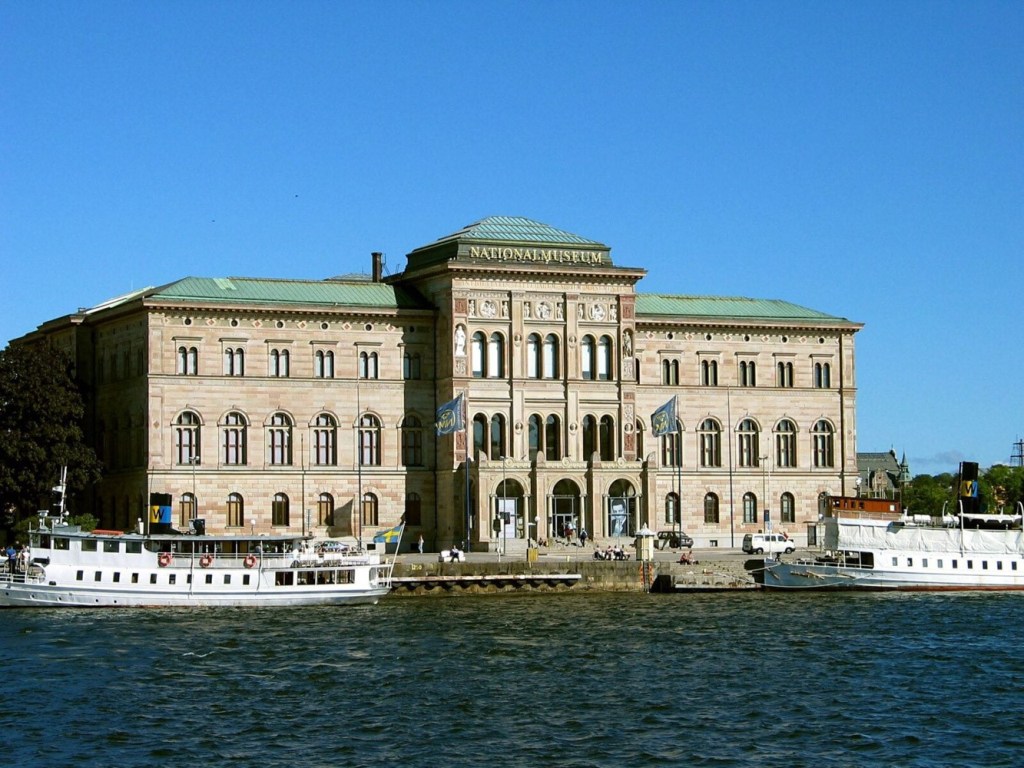
NATIONALMUSEUM IN STOCKHOLM, SWEDEN. THIEVES GOT AWAY ON SPEEDBOAT.
Van Gogh painting goes missing during lockdown, Singer Laren Museum, Netherlands 2020
While we were going about our business at the start of the pandemic trying out new dishes, binge-watching series but mostly rocking back and forth sobbing, etc., robbers were still out and about doing their thing, making the most of widespread, Covid-induced closures. Like in the Netherlands, when during the early hours of March 30th, 2020, an art thief pulled up to the Singer Laren Museum on a motorcycle and proceeded to smash his way through layers of protective window glass with a sledgehammer.
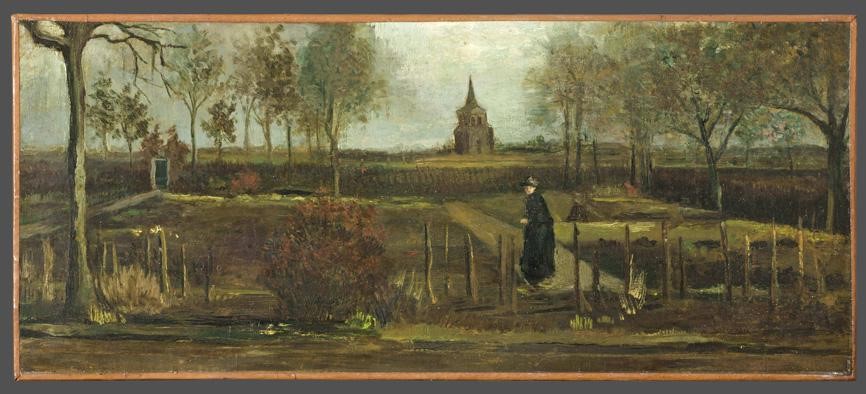
THE STOLEN PAINTING: VAN GOGH’S ‘THE PARSONAGE GARDEN AT NUENEN IN SPRING,’ 1884
Conveniently captured on CCTV cameras, the thief can be seen moving swiftly through the museum, whipping in and then out, taking with him Van Gogh’s The Parsonage Garden at Nuenen in Spring, 1884, which is worth millions. Local media put the value of the painting at between €1 million and €6 million ($1.1 million to $6.6 million).
“I am shocked and incredibly pissed off,” museum director Jan Rudolph de Lorm told Dutch public broadcaster. “Art is there to be enjoyed and to comfort people, especially during this difficult time,” Police say thieves entered the museum at around 3.15 a.m. local time. They are currently examining security footage and investigating the crime.
The museum, which lies around 30 kilometers (18 miles) from Amsterdam, has not reported any other missing works. The museum houses around 3,000 works.
Before the closure, the museum was hosting an exhibition titled “Mirror of the Soul,” in cooperation with Amsterdam’s Rijksmuseum.
The museum houses the collection of American couple William and Anna Singer, with a focus on modernism such as neo-impressionism, pointillism, expressionism, and cubism. Works by Dutch abstract artist Piet Mondrian and Dutch-Indonesian painter Jan Toorop are housed there.
Coincidentally, the theft coincided with Van Gogh’s birthday.
Although any arrests are yet to be made, Dutch art detective Arthur Brand is on the case and is said to have received two photographs that prove the artwork is still out there, somewhere.
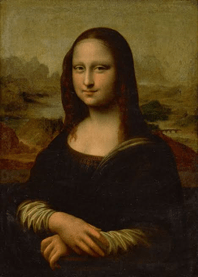
One of the most sought-after painting by Leonardo da Vinci, Mona Lisa was painted five centuries ago (1503 – 1519). Today, it hangs behind a highly protective bulletproof glass inside the Louvre Museum. It is regarded as the most famous painting in the world, drawing thousands of admirers from all corners of the world every day. It has its room and receives mails from fans all over the globe. Here are five mysteries which surround this painting.
Mona Lisa Mystery #1: Who was Mona Lisa?
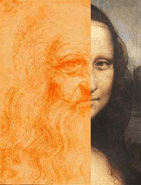
Over the past century, it has been proposed that Mona Lisa was a noblewoman – Isabella d’Este, Others have stared at that unsettling visage and seen the face of a man – Leonardo da Vinci himself, or the man who was for 20 years his assistant and perhaps his lover, Gian Giacomo Caprotti. This theory stresses on the fact that Da Vinci was gay and this painting was a shout out for his rights and that was the reason to paint a man as our woman, Monalisa.
Mona Lisa Mystery #2: The Broken Backdrop
The distant, dreamlike vista behind the Mona Lisa’s head seems to be higher on the right-hand side than on the left. It is hard to see how the landscape would join up. This is subliminally unsettling: Mona Lisa appears taller, more erect, when one’s gaze drifts to the left than when it is on the right.
Mona Lisa Mystery #3: The Bewitching Smile
In 2000, scientists at Harvard University put forward a neurological explanation for Mona Lisa’s elusive smile. When a viewer looks at her eyes, the mouth is in peripheral vision, which sees in black and white. This serves to accentuate the shadows at the corners of her mouth, making the smile seem broader. But the smile diminishes as soon as you look straight at it. It is the variability of her smile, the fact that it changes when you look away from it, that makes her seem so alive, and so mysterious.
Mona Lisa Mystery #4: The Unknown Bridge
The Mona Lisa’s background landscape seems unreal, but the bridge might be one that Leonardo knew. It is usually said to be Ponte Buriano in Tuscany, but in 2011 a researcher claimed that it depicts the Bobbio bridge over the Trebbia, which was washed away in a 1472 flood. Another study claimed that the number 72 could be seen in the brushstrokes on the bridge.
Mona Lisa Mystery #5: Da Vinci’s Obsession
Leonardo da Vinci worked on the painting for four years, and possibly at intervals after that. Strangely, he always took it with him when he travelled, and he never signed or dated it. The picture went with him when, towards the end of his life, he moved to France. It was sold to his last patron, King François I, and remained out of sight in the royal collection for almost 200 years. In 1799 Napoleon, then first consul of France, came across the painting and commandeered it for his bedroom. It was only in 1804 that the Mona Lisa went on public display – in the newly founded Louvre museum. At that time, and for decades afterwards, it was not seen as particularly interesting, but in the middle of the 19th century Leonardo’s stock as an artist slowly rose. He came to be seen as the equal of the two acknowledged Renaissance greats, Michelangelo and Raphael. This new-found interest in Leonardo as a painter drew attention to his few known works. The Mona Lisa, easily accessible in the Louvre, became an object of interest to critics and aesthetes at just the time that a new and deeply sensual attitude to art was emerging in France.
Mona Lisa is a simple portrait of an ordinary woman dressed in a modest veil, dark robes, and without jewellery. It is the proof that “smile” is the most attractive accessory that can be worn!
Written by Akash Velanganni D, Oviya Shree S, Swasthika Y K, Kumararaja G, Shreya C S, Sushmitha, Sowmiya Sri S, Nikitha D and Darshan.
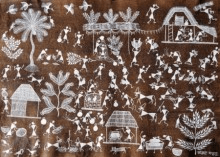
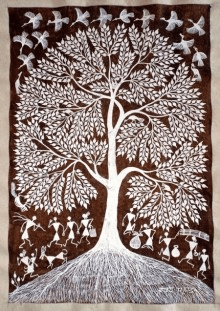
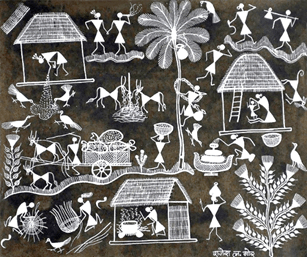
Warli is one of the oldest forms of Indian folk art and has its origins in the Warli region of Maharashtra. This form of tribal art mainly makes use of geometric shapes such as circles, triangles and squares to form numerous shapes depicting life and beliefs of the Warli tribe. In olden days, Warli art was done on walls on special occasions. The painting would be done over a brown background which would basically be a mixture of mud and cow dung cakes. The white pigment used to draw shapes and figures would be a mixture of rice mixed with water and gum. One of the most popular themes in Warli art is a spiral chain of humans around one central motif. This in accordance with their belief that life is an eternal journey, and it has no beginning and end.
Origin/History:
The Warli tribe is one of the largest in India, located outside of Mumbai. Despite being close to one of the largest cities in India, the Warli reject much of contemporary culture. The style of Warli painting was not recognized until the 1970s, even though the tribal style of art is thought to date back as early as 10th century A.D. The Warli culture is centered around the concept of Mother Nature and elements of nature are often focal points depicted in Warli painting. Farming is their main way of life and a large source of food for the tribe. They greatly respect nature and wildlife for the resources that they provide for life.
Theme:
The theme of Warli painting is not mythological but rather activities of daily life like hunting, harvesting, dancing and sowing. There is evidence of the art finding its origins in cave painting from Neolithic times. When you look at Warli painting, the first thing that jumps out at you are the rudimentary shapes – circles, triangles and squares. The circle and triangle comes from their observations of nature. The circles represent the sun & moon and the triangle represent mountains and pointed trees. The square seems to be a man-made construct, representing a sacred enclosure of a piece of land. A “Devchauk” is a square frame with the sun, moon, a comb, a ladder & a tarpa around it. It is ornately decorated and depicts Palaghata, the goddess of fertility in the center. The most iconic theme in Warli painting is the Tarpa dance. The spiral design is made of up of men and women with a Tarpa player in the centre. In this dance, the Tarpa player directs the dance with his Tarpa, a trumpet-like instruments like a snake charmer. The men and women sway back and forth rhythmically in a concentric spiral, never turning their backs to the Tarpa player and moving clockwise or anti-clockwise depending on the notes being played. This unique shape is also said to symbolize the circle of life and death.
Materials used:
The walls are made of a mixture of branches, earth and red brick that make a red ochre background for the paintings. The Warli is only painted with a white pigment made from a mixture of rice flour and water, with gum as a binder. A bamboo stick is chewed at the end to give it the texture of a paintbrush. Warli artists use their clay huts as the backdrop for their paintings, similar to how ancient people used cave walls as their canvases.
Areas of establishment:
Warli painting is a style of tribal art mostly created by the tribal people from the North Sahyadri Range in India. This range encompasses cities such as Dahanu, Talasari, Jawhar, Palghar, Mokhada, and Vikramgadh of Palghar district.
These tribal paintings of Maharashtra are traditionally done in the homes of the Warlis.
Keeping the art form alive:
Traditional art forms these days need to be preserved and many have come forward to do it.One such saviour is Govardhan Eco Village in Thane district that makes an effort to keep this art form alive by providing Warli artists various platforms to display their art.
In February 2016, a group of Japanese artists adopted the Ganjad village in Palghar district in an effort to keep the art form alive. Many others are also doing their share in preserving it.
So, purchasing and promoting hand-painted Warli items seems like a fitting tribute to this one-of-a-kind art form.
Written by Shruthi R, Gokul Raj K, Narmada N, Mega S S, Loga Lavanya G and Krithiga.
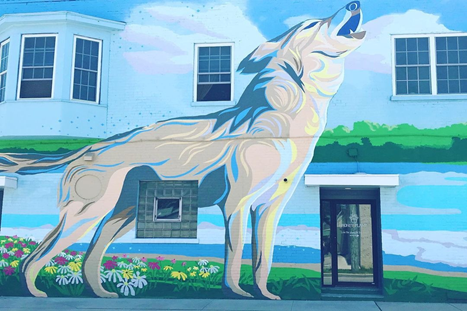
The word mural originates from the Latin word “MURUS”, meaning wall. Mural is a painting applied to and made integral with the surface of a wall or ceiling. The oldest of the murals found in Kerala are those in the Thirunandikkara Cave temple now a part of Kanyakumari district in the neighbouring State of Tamil Nadu. The largest mural panel in Kerala called the Gajendra Moksha is at the Krishnapuram Palace near Kayamkulam in Alappuzha district. Kerala murals are a symbol of natural beauty and grace, elegance and simplicity and of pious devotion. The murals of the Shiva Temple at Ettumanoor provide insights into the earliest forms of Dravidian mural art.
History:
Modern times, the term became better known with the Mexican muralism art movement (Diego Rivera, David Siqueiros and José Orozco). There are many different styles and techniques. The best-known is probably fresco, During the Middle Ages murals were usually executed on dry plaster (secco). The huge collection of Kerala mural painting dating from the 14th century are examples of fresco secco. In Italy, circa 1300, the technique of painting of frescos on wet plaster was reintroduced and led to a significant increase in the quality of mural painting.
The marouflage method has also been used for millennia.
Murals today are painted in a variety of ways, using oil or water-based media. The styles can vary from abstract to trompe-l’œil (a French term for “fool” or “trick the eye”). Initiated by the works of mural artists like Graham Rust or Rainer Maria Latzke in the 1980s, trompe-l’œil painting has experienced a renaissance in private and public buildings in Europe.
A painting or photographic image is transferred to poster paper or canvas which is then pasted to a wall surface (see wallpaper, Frescography) to give the effect of either a hand-painted mural or realistic scene.
A special type of mural painting is Lüftlmalerei , still practised today in the villages of the Alpine valleys. Well-known examples of such façade designs from the 18th and 19th centuries can be found in Mittenwald , Garmisch , Unter- and Oberammergau.
Types:
Types of Mural Arts
Painted Murals | Abstract Murals | Ceramic Murals
Painted Murals: Mural paintings are quite common. Often artists use acrylics to paint wall forms to express their ideas. Suzi Nassif’s murals are not abstracts. They are painted in acrylics. Suzi nassif paintings are the level of inspiration and her artistic mural (wall painting ) is loved by the audience.
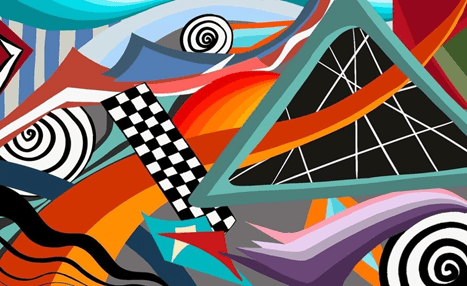
Abstract Murals: These pieces can either be on giant canvas or can be partitioned into different areas. These abstracts presents figures and shapes to convey a message to the viewers. They might make use of shapes and forms that are non-conventional.
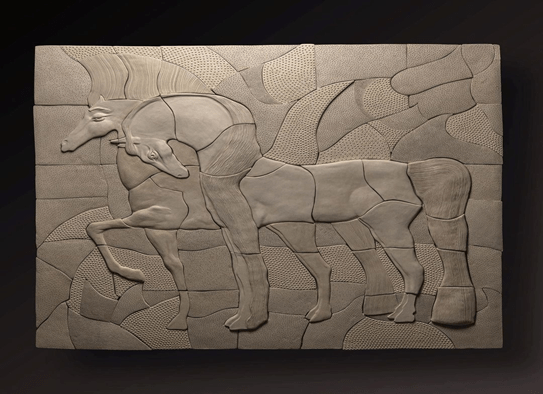
Ceramic Murals: These are the principal sort of custom size paintings and they are comprised of mirrors, mosaic and artistic pieces. This sort of paintings speak to brilliant depictions of high class creative impulses and in addition masterful aptitudes. The fired wall paintings are first made with the assistance of dirt and afterward they are heated.
Techniques of Mural Arts:
To get started, you’ll need to transfer your image onto the wall. By now you should have a sketch of what your mural will look like so you’ll need to enlarge the image into the wall using either one of these mural techniques: the grid method or an art projector. Use a pencil to trace the image onto your wall.
Now that you have your pencil outline, you can start the underpainting. The underpainting consists of large blocks of color, over which you will paint more detail later. Depending on the colors in your image, you can use interior household paint for large areas of color (blue skies, green fields, etc), or you can mix your artist-quality acrylic paints with a Liquitex Ultra Matte Gel or Matte Gel Medium by using a 1:1 ratio. From here on out, most mural techniques are similar to the painting techniques that you would use when painting with acrylics on canvas. Here are some of the many different mural techniques at your disposal.
Stenciling:
Stenciling is a popular mural technique because it is fairly simple and anyone can do it – you don’t need any special art skills. You can buy stencils in a wide variety of shapes and sizes, from alphabet letters to farm animals to wildlife, trees, planets, you name it!
To stencil, use a painter’s tape to adhere the stencil to the wall. With one hand, hold the stencil in place and with your other hand, paint in the color. You need to be cautious around the edges, because you don’t want too much paint build-up on the edges when you lift the stencil away. Use a sweeping, circular motion when applying paint near the edges to avoid build up.
You can also use a stencil as an outline, and paint in details later. For example, you can follow the mural technique described above to stencil the image of an alligator in a solid shade of green. Then remove the stencil and paint in details, such as eyes, teeth, and bumpy skin.
Antiquing:
Antiquing is one of the easiest mural techniques. To antique a wall, mix your desired color (usually siena or umber to create an aged look) with an acrylic glazing medium, using the ratio of 4 to 5 parts glaze to 1 part paint. Brush the mixture onto your wall and quickly – while the paint is still wet – run a clean rag or cheesecloth over the paint to spread it around. For an added effect, you can use this technique to add even darker color to the corners and edges of the wall.
Glazing:
To create acrylic glazes on a wall, mix the acrylic paint with an acrylic medium Golden Glazing Liquid. This will thin and “stretch” the paint, making it more translucent. When you paint a glaze on the wall, the color underneath will show through. This is a handy mural technique for adding dimension and shading to your mural.
Significance:
Murals are important in that they bring art into the public sphere. Due to the size, cost, and work involved in creating a mural, muralists must often be hired by a sponsor. For artists, their work gets a wide audience who otherwise might not set foot in an art gallery. Most often it is the local government or a business, but many murals have been paid for with grants of support and often the visual effects are dizziness to attract public attention to social issues. Murals can be a relatively effective tool of social liberation or achieving a political goal. State-sponsored public art expressions, particularly murals, are often used by totalitarian regimes as a tool of mass-control and propaganda. Murals have served as an important means of communication for members of socially, ethnically and racially divided communities during conflicts. Many rural towns have started using murals to attract tourists to boost economic income.
Conclusion:
To summarize, Mural paintings is different from other forms of painting as it instill emotions in humans. Beautification and positivity goes hand in hand in the case of mural painting. Moreover it is effective in depicting social and political traumas. Mural paintings are stress buster, hence I call it ‘Artist`s own Morphine’. Next time, do give a shot on mural paintings.
Written by Abinayadevi K, Subbiah Surya Kumar J, Farzana N, Amitha Das C, Sivasankari T, Dharshan S and Priyanka G.
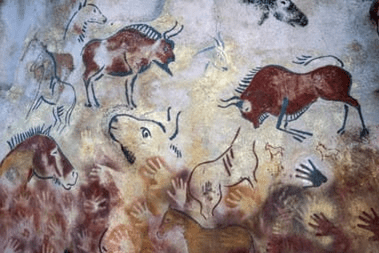
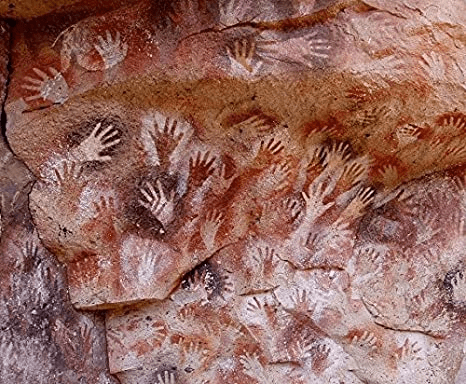
Cave paintings are a type of parietal art, it was found on the wall or ceilings of caves. Its includes petroglyphs or engravings. The term usually implies prehistoric origin, but cave paintings can also be of recent production. Cave paintings are more than 44,000 years old. The oldest type of cave paintings are hand stencils and simple geometric shapes.
Some of the prehistoric cave paintings:
Magura Cave is located in the northwest of Bulgaria , it contains a full of cave paintings and painted with bat excrement that date from 8000-4000 years ago . . An excess of 700 paintings has been discovered in the large cave. Cueva de las Manos is located in Patagonia in the southern part of Argentina and contains cave paintings that were created between 13,000 and 9,000 years ago. Serra-da-Capivara is a national park in Brazil which has the largest and the oldest concentration of prehistoric paintings in the Americas. Laas Geel contain some of the earliest known cave paintings in the Horn of Africa. These are some important old cave paintings.
Most cave art consists of paintings made with either red or black pigment. The reds were made with iron oxides (hematite),whereas manganese dioxide and charcoal were used for the blacks. Executed mainly in red and white with the occasional use of green and yellow, the paintings depict the lives and times of the people who lived in the caves, including scenes of child birth, communal dancing and drinking, religious rites and burials as well as indegeneous animals. The most notable thing about cave art is that the predominant colours used are black(often from charcoal, soot or manganese dioxide) yellow ochre(often from limonite),red ochre(hematite, or baked limonite)and white (kaolin clay, burnt shells, calcite, powdered gypsum, or powdered calcium carbonate).The stable temperature and humidity in caves, a lack of human contact, and long lasting painting materials have combined to allow many ancient cave paintings to survive in nearly pristine condition.
In art, is a dog just a dog? Certainly not in European art history, where a canine on canvas can contain multitudes—representing anything from fidelity to treachery to seduction. And while these contradictory readings may seem to muddy the message of a given painting, they are also evidence of the long and rich history of animal symbolism in Western art. While humans and animals occupy the same earth, we inhabit different worlds, each having its own ways of being. Yet, artists depicting animals cast bridges across divides to the non-human world allowing them to flourish outside one’s own expectations. The first cave depictions of different beasts were mainly inspired by hunting. Remarkable for their realism and liveliness, a recent study determined that these drawings were actually better at accurately depicting the way four-legged animals walk than artists from the 19th and 20th centuries
The simplest and oldest form of self-expression found in prehistoric caves is finger marking, or tracing, sometimes called “finger-fluting”. This ancient art, seen on soft clay walls, usually consists of formless squiggles but can also depict animal and even humanoid figures. Good examples can be seen at Altamira, Antillana del Mar, Baume Latronne, Cosquer, Koonalda (Australia) and Rouffignac.
Handprints are one of the most common images of rock art, and appear in Stone Age caves throughout the world, including Sulawesi (Indonesia), Cosquer (France), Fern Cave (Australia), Elands Bay Cave (South Africa), El Castillo (Spain), Gargas (France), Maltravieso (Spain), Cueva de las Manos (Argentina), Altamira (Spain), East Kalimantan Caves (Borneo) and many others. According to recent analysis, the majority of painted hands in caves belong to women. There are two basic types of handprint: painted prints or stencilled silhouettes. Either the hand was painted (usually with red, white or black pigment) and then applied to the rock surface, producing a crude image of the hand; or the hand was placed on the wall or ceiling and pigment was then blown through a hollow tube over it, leaving behind a silhouette of the hand on the rock. Sometimes the stencil was made simply by painting around it with a pad dipped in pigment.
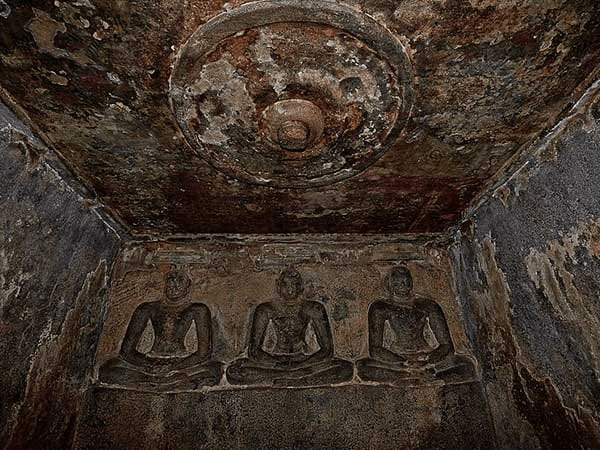
India is known for its mind-blowing cultural heritage which holds the roots of Indian art which can be traced by the rock-cut structures and cave paintings. Paintings and drawings became the oldest art style by human beings, to express themselves using the cave walls as their canvas. Ajanta Caves has the oldest Indian paintings. Interestingly, these paintings are made around the 1st century BC. Interestingly, Ajanta cave was built in two-phases. One around the 2nd century BC and the other one around 400-650 BC. The Ajanta Portraits owe their life primarily to Mahayana sector of Buddhism. Buddha’s life is depicted in the form of various images, drawings and other artistic depictions. They are universally called the masterpieces of Buddhist art.
Ellora is a very well known UNESCO World Heritage site, which is located in Maharashtra. There are almost 100 caves at the site, all excavated from the basalt cliffs Chandigarh. It is one of the world’s largest rock-cut monastery cave which features the Hindu, Buddhist, and Jain temples, and artworks which dates back to 600 – 1000 CE period. You should not want to miss the famous Kailash or Kailasanatha, largest of the rock-cut Hindu temples at the Ellora caves. It is considered as one of the most remarkable cave temples in the world. The most ancient cave paintings we are aware of are more than 40,000 years old. Exactly why our ancestors chose to make these paintings is a matter of speculation.
The most important Ancient cave paintings in TamilNadu:
Sittanavasal Cave is extremely popular amongst tourists for its wall paintings which are formed by using colours on the surface of the lime plaster. Several colours such as yellow, orange, blue, white, green and black are used to create lotus ponds, several figures, fish, buffaloes, elephants, etc. These paintings are carefully made keeping minute things in mind such as designs, borders and appropriate use of colours. Even though the paintings are in a deteriorating condition, they are still attract thousands of visitors on a regular basis. After all, it is not easy to create masterpieces which can thrive for centuries in the form of paintings made out of vegetable and mineral dyes using colours. It is certainly objectionable to bypass this remarkable beauty if you are in and around the Pudukottai district of Tamil Nadu.
Why cave art was painted is a mystery. However, images created the world we lived in and the world to come. Art, as a form to express an idea, is still going strong now. If we feel that past efforts predict future efforts, then the possibilities are endless. Images in any form are a window unto the past and a door to the future.
Written by Kanishga B, Mahisharthi V, Karunya A, Jamunadevi R, Gayathree Prabha, Rupashree, Sindhu S, Abinaya B.
The origin of Indian art can be traced to prehistoric settlements in the 3rd millennium BC, to the Chalcolithic Age as is evident from the progress of the Indus Valley Civilization. The buildings of Indus Valley culture though made of bricks, possessed little aesthetic material. On its way to modern times, Indian art has had cultural influences, as well as religious influences such as Hinduism, Buddhism, Jainism, Sikhism and Islam. Despite this complex mixture of religious traditions, generally, the prevailing artistic style at any time and place has been shared by the major religious groups. In historic Indian art, sculpture in stone and metal, mainly religious, has survived the Indian climate better than other media and provides most of the best remains. In fact, we hardly come across any architectural remains of the pre-Mauryan period which have reached artistic value. This may be because the buildings were not made of stone during this period. Many of the most important ancient finds that are not in carved stone come from the surrounding, drier regions rather than India itself. Indian funeral and philosophic traditions exclude grave goods, which is the main source of ancient art in other cultures.
Indian art consists of a variety of art forms, including painting on a variety of handmade canvases, using nature-based media, sculpture, pottery, and textile arts such as woven silk. A strong sense of design is characteristic of Indian art and can be observed in its modern and traditional forms.
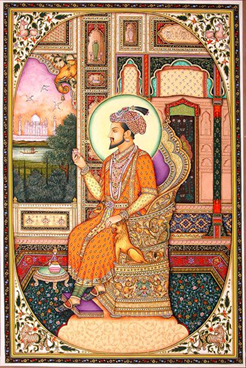
Miniature Paintings
These paintings are characterized by its miniature size but intricate details and acute expressions. Originating in the Mughal era, around 16th century, Miniature paintings are influenced by Persian styles. Later, it was adopted by Rajputs, and is now popularly practiced in Rajasthan. As with other art forms, the paintings depict religious symbols and epics. These paintings stand out as humans are portrayed with large eyes, a pointed nose and a slim waist, and men are always seen with a turban. They were profoundly influenced by Indian literature and were executed as illustrations to texts or as individual paintings. They were small-scale, highly detailed pictorial compositions, often providing a true record of the social and cultural life of the time.’
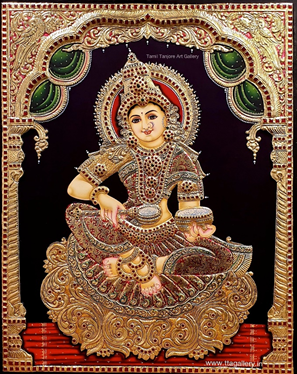
Tanjore Art
From down South, Tanjore or Thanjavur paintings originated in 1600 AD, encouraged by the Nayakas of Thanjavur. The characteristics of the Tanjore paintings are their brilliant colour schemes, decorative jewelry with stones and cut glasses and remarkable gold leaf work. Adorned with rubies, diamonds and other precious gemstones, and trimmed with gold foil, Tanjore paintings were true treasures. Nowadays, however, semi-precious stones are used in place of real ones, but the use of gold foil has not altered. The shine and glean on the gold leaves used by the Tanjore style paintings, lasts forever.
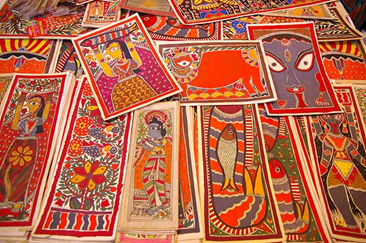
Madhubhani Painting
Madhubani painting, also referred to as Mithila Art (as it flourishes in the Mithila region of Bihar), is a traditional Indian folk art characterized by line drawings filled in by bright colours and contrasts or patterns. It is made on canvas, cloth or cow dung washed hand paper. Natural dye and mineral pigments are used in creation of Madhubhani artworks with geometrical figures and vibrant colours being key elements. This art form has five distinctive styles: Bharni, Kachni, Tantrik, Godna and Khobar.
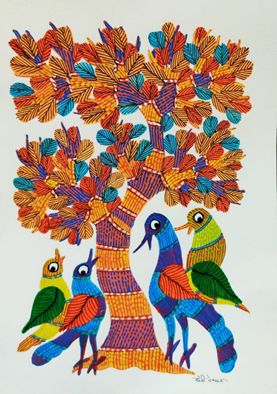
Gond Art
A native art form of Madhya Pradesh, Gond paintings are mostly themed on animals and birds. Practiced by the Gond tribes, this art form is believed to be more than1400 years old. Natural colours derived from plant sap, charcoal, coloured soil, cow dung, leaves, etc. are used to make this type of paintings. If you look closely, it is made up of dots and lines, diagonals, chains, crosses, tiny circles, or any other stroke that can be repeated thousands of times over. Today, these styles are imitated, but with acrylic paints.
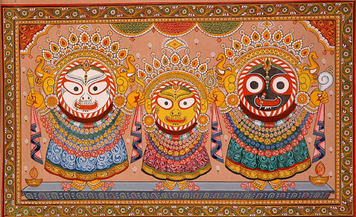
Pattachitra Painting
Pattachitra style of painting is one of the oldest and most popular art forms of Odisha. The name Pattachitra has evolved from the Sanskrit words patta, meaning canvas, and chitra, meaning picture. Pattachitra is thus a painting done on canvas, and is manifested by rich colourful application, creative motifs and designs, and portrayal of simple themes, mostly mythological in depiction. Women members prepare the glue, the canvas and apply colours what we call the fill-in and give the final lacquer coating. The male member draws the initial line and gives the final finishing.
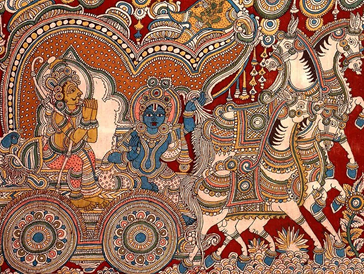
Kalamkari
Literally meaning ‘drawings with a pen’, Kalamkari is of two types in India: Machilipatnam, which originates from Machilipatnam in Andhra Pradesh and Srikalahasti, which originates from Chitoor in the same state. While the former refers to block-printed form of art, the latter is a free-flowing art with a pen on fabric. Today, Kalamkari art is used on sarees and ethnic clothing, and depicts anything from flora and fauna to epics such as Mahabharata or Ramayana.
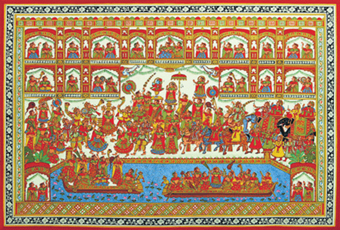
Phad
Originating in Rajasthan, Phad is mainly a religious form of scroll painting depicting folk deities Pabuji or Devnarayan. The 30- or 15 feet-long canvas or cloth that it is painted on is called Phad. Vegetable colours and a running narrative of the lives and heroic deeds of deities characterise these paintings. the depictions are usually of battlefield scenes, adventure stories, legendary romances, etc. The beauty of these paintings lies in the fact that many stories are accommodated in a single composition.
Warli Painting
This form of art dates back to 2500 BCE, and it was practiced by the Warli tribes belonging from Thane and Nasik in Maharashtra. It is mainly the use of circles, triangles, and squares to form numerous shapes and depict daily life activities like fishing, hunting, festivals, dance and more. What sets it apart is the human shape: a circle and two triangles. All the paintings are done on a red ochre or dark background, while the shapes are white in colour.
Conclusion
Although several decades and centuries have passed, the rock paintings and stone paintings of India last long. There remain numerous unsolved mysteries in ancient paintings. Ancient Indian art teaches us not only the skills of traditional artists but also the natural elements they used for painting, without causing harm to the environment and to humans. The media they used were completely natural and eco-friendly unlike the media used nowadays. Some pigments, which they extracted from certain plants contained anti-microbial attributes, and others had medicinal properties. Even today, ancient Indian art stands apart from others, because of its unique styles and techniques. So, if we start involving deeply into these arts, we can discover more new information and we can develop our cultural heritage in the form of Indian art.
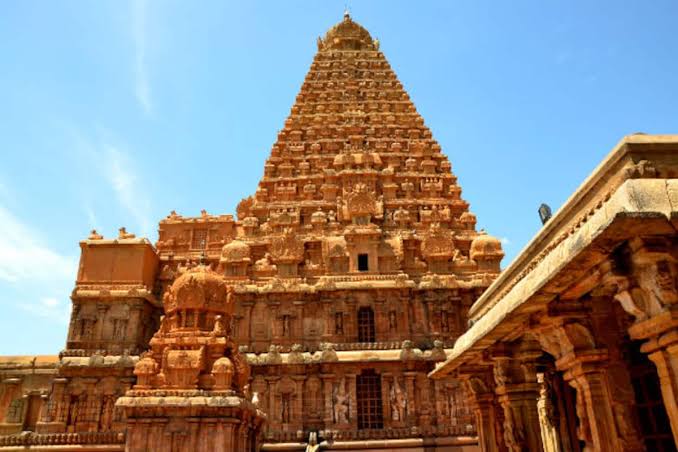
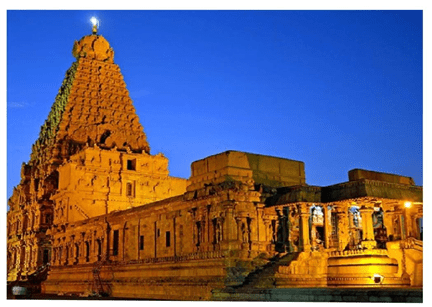
Peruvudaiyaar Kovil is a Hindu temple dedicated to Shiva which is also called as Brihadeeswarar temple. It is a Hindu temple dedicated to Shiva, also called Rajarajesvaram temple or Peruvudaiyār Kōvil temple. It is located on the south side of Kaveri river in Thanjavur in the Indian state of Tamil Nadu. The temple is part of the UNESCO World Heritage Site known as the “Great Living Chola Temples”, along with Brihadeeswarar Temple, Gangaikonda Cholapuram and Airavatesvara temple. The patron of the temple RajaRaja Chola has also arranged to make very large number of inscriptions in a highly detailed manner that has no precedence in the history of any other temple in the world. These inscriptions divulge some crucial information and secrets regarding temple construction and its different features.
History
The daily rituals to be conducted in the temple, the details of offerings and decorations to be made with a specific description of all the jewels donated to the temple, the methods of special worship on important days and several other crucial information regarding the administration of the temple. History says the 107 paragraphs inscribed were personally dictated by the king being seated in the royal bathing hall at the eastern side of the Palace. While none of the massive palaces built during the history of Cholas survives today, the fact that Brihadeshwara temple has managed to stand the test of time for more than a thousand years proves the superior accomplishment of Chola architecture and the patron’s incomparable devotion for Shiva.
spectrum of Hindu temple styles continued to develop from the 5th to the 9th century over the Chalukya era rule as evidenced in Aihole, Badami and Pattadakal, and then with the Pallava era as witnessed at Mamallapuram and other monuments. Thereafter, between 850 and 1280 CE, Cholas emerged as the dominant dynasty. The early Chola period saw a greater emphasis on securing their geopolitical boundaries and less emphasis on architecture. In the 10th century, within the Chola empire emerged features such as the multifaceted columns with projecting square capitals. This, states George Michell, signaled the start of the new Chola style. This South Indian style is most fully realized both in scale and detail in the Brihadeshwara temple built between 1003 and 1010 by the Chola king Rajaraja I
CONSTRUCTION
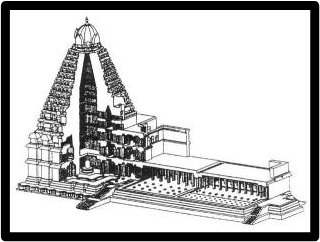
The Brihadeshwara temple plan and development utilizes the axial and symmetrical geometry rules. it’s classified as Perunkoil (also called Madakkoil), a giant temple built on the next platform of a natural or man-made mounds.The temple complex may be a rectangle that’s almost two stacked squares, covering 240.79 metres (790.0 ft) east to west, and 121.92 metres (400.0 ft) north to south. during this space are five main sections: the sanctum with the towering superstructure (sri vimana), the Nandi hall before (Nandi-mandapam) and in between these the most community hall (mukhamandapam), the good gathering hall (mahamandapam) and also the pavilion that connects the good hall with the sanctum (ardhamandapam).The temple complex integrates an oversized pillared and covered veranda (prakara) in its spacious courtyard, with a fringe of about 450 metres (1,480 ft) for circumambulation. Outside this pillared veranda there are two walls of enclosure, the outer one being defensive and added in 1777 CE by the French colonial forces with gun-holes with the temple serving as an arsenal. They made the outer wall high, isolating the temple complex area. On its east end is that the original main gopuram or gateway that’s barrel vaulted. it’s but half the scale of the most temple’s vimana. Additional structures were added to the initial temple after the 11th century, like a mandapa in its northeast corner and extra gopurams (gateways) on its perimeters to permit people to enter and leave from multiple locations.a number of the shrines and structures were added during the Pandya, Nayaka, Vijayanagara and Maratha era, before the colonial era started, and these builders respected the initial plans and symmetry rules. Inside the first temple courtyard, together with the most sanctum and Nandi-mandapam are two major shrines, one for Kartikeya and for Parvati. The complex has additional smaller shrines.The Brihadeshwara temple continued the Hindu temple traditions of South India by adopting architectural and ornamental elements, but its scale significantly exceeded the temples constructed before the 11th century. The Chola era architects and artisans innovated the expertise to rescale and build, particularly with heavy stone and to accomplish the 63.4 metres (208 ft) high towering vimana.
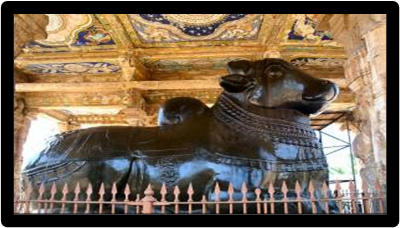
The temple faces east, and once had a water moat around it. This has been filled up. The fortified wall now runs around this moat. the 2 walls have ornate gateways called the gopurams. These are made up of stone and display entablature. the most gateways are on the side. the primary one is termed the Keralantakan tiruvasal, which suggests the “sacred gate of the Keralantakan”. The word Keralantakan was the surname of king Rajaraja who built it. a couple of 100 metres (330 ft) ahead is that the inner courtyard gopuram called the Rajarajan tiruvasal. this can be more decorated than the Keralantakan tiruvasal, like with its adhishthanam relief work narrating scenes from the Puranas and other Hindu texts.[28] The inner eastern gopuram ends up in an unlimited courtyard, during which the shrines are all signed to east–west and north-west cardinal directions. The complex are often entered either on one axis through a five-story gopuram or with a second access on to the massive main quadrangle through a smaller free-standing gopuram. The gopuram of the most entrance is 30 m high, smaller than the vimana. The main temple-related monuments and therefore the great tower is within the middle of this courtyard.Around the main temple that’s dedicated to Shiva, are smaller shrines, most of which are aligned axially. These are dedicated to his consort Parvati, his sons Subrahmanya and Ganesha, Nandi, Varahi, Karuvur deva (the guru of Rajaraja Chola), Chandeshvara and Nataraja.The Nandi mandapam incorporates a monolithic seated bull facing the sanctum. In between them are stairs resulting in a columned porch and community gathering hall, then an inner mandapa connecting to the pradakshina patha, or circumambulation path. The Nandi (bull) facing the mukh-mandapam weighs about 25 tonnes. it’s fabricated from one stone and is about 2 m tall, 6 m long and a couple of.5 m wide.The image of Nandi could be a monolithic one and is one among the biggest within the country.
INTRESTING FACTS ABOUT BRIHADEESHWARA TEMPLE
The big Tanjore temple is said to have more than hundred underground passages that connects to various other places. Nowadays, most of the passages are sealed. In the earlier days, the passages were used by sages, Kings and Queens to roam about different temples and places, especially during auspicious festivals like Deepavali, Maha Shivarathri and Makar Sankranti.The temple is said to have a huge cap stone on top of it, and the weight of the stone is said to be 80 tonnes. The Garbhagriha where the Shiva lingam is located is said to generate large amount of electromagnetic energy.The 80 tonne stone acts a repulsive force and channels the energy to the inner areas of the temple to sustain its piousness and divinity.The positive energy radiant within in the temple structure is said to have a calming, soothing effect both mentally and physically on the devotees.
The primary tower has a hollow shape and the stones are interlocked without any binding material, while they stand powerfully in their weight. Another miracle is the 216 ft hollow tower, without any binding material, has an ideal equilibrium and balance, despite all the natural disasters in 1000 years.
The Nandhi statue, sculptured during the Raja Raja Cholan period, kept growing in the size. It could be even because of the unique weather condition and to control its growth, it was kept aside and nailed to the grounds. However, the current statue before Lord Shiva is a single stone statue and was gifted by the Maratha rulers in the 17th-19thcentury.
CONCLUSION
It will took almost an hour to roam around the temple complex, to look at the sculptures, relook at them and marvel at the murals and frescoes. All this time we may keep on wondering the might of the ruler Raja Raja Chola who had the vision to create something so grand. The place is also referred to as the “Great Living Chola Temples” and the temple is still living as the symbol of the Chola rule.
Written byHema Bharathi, Noufar Mohamed, Jaswant Kumar, Paval, Divya, Elakkiya.
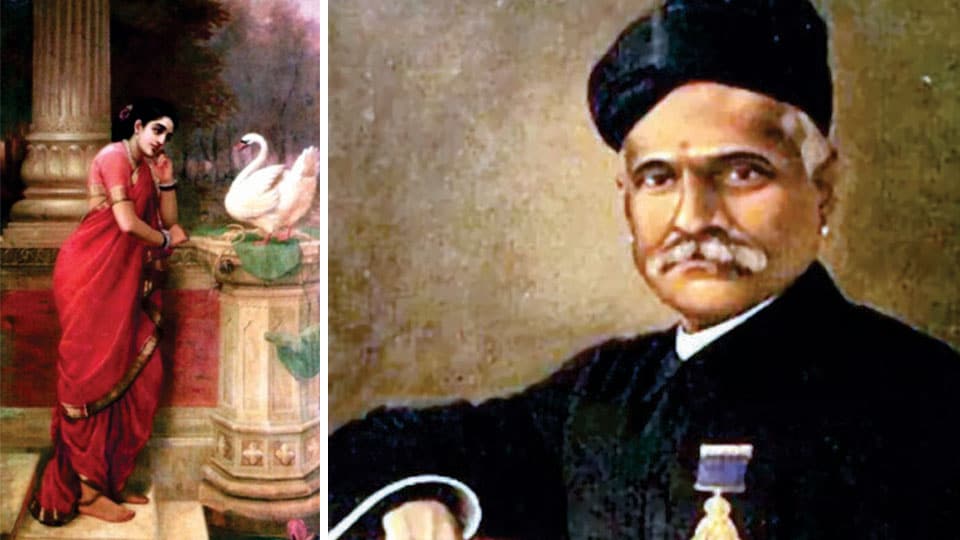
Raja Ravi Varma (29 April 1848 – 2 October 1906) was a celebrated Indian painter and artist. He is considered among the greatest painters in the history of Indian art. His works are one of the best examples of the fusion of European academic art with a purely Indian sensibility and iconography. Additionally, he was notable for making affordable lithographs of his paintings available to the public, which greatly enhanced his reach and influence as a painter and public figure. His lithographs increased the involvement of common people with fine arts and defined artistic tastes among common people. Furthermore, his religious depictions of Hindu deities and works from Indian epic poetry and Puranas have received profound acclaim.
Ravi Varma was patronised by Ayilyam Thirunal, the next Maharaja of Travancore and began formal training thereafter. He learned the basics of painting in Madurai. Later, he was trained in water painting by Rama Swami Naidu and in oil painting by Dutch portraitist Theodor Jenson.
The British administrator Edgar Thurston was significant in promoting the careers of Varma and his brother. Varma received widespread acclaim after he won an award for an exhibition of his paintings at Vienna in 1873. Varma’s paintings were also sent to the World’s Columbian Exposition held in Chicago in 1893 and he was awarded three gold medals. He travelled throughout India in search of subjects. He often modelled Hindu Goddesses on Indian women, whom he considered beautiful. Ravi Varma is particularly noted for his paintings depicting episodes from the story of Dushyanta and Shakuntala, and Nala and Damayanti, from the Mahabharata. Ravi Varma’s representation of mythological characters has become a part of the Indian imagination of the epics. He is often criticized for being too showy and sentimental in his style, but his work remains very popular in India. Many of his fabulous paintings are housed at Laxmi Vilas Palace, Vadodara.
By mass-producing oleographs, of which the most popular were images of Hindu gods and goddesses, Varma’s printing press challenged narrow ideas of the ownership of art. Caste hierarchies in Hinduism had dictated who could own images of gods, and where and how these images must be displayed. Completely shattering the idea of ‘high and low art’, the ‘royal’ artist became a champion of making art accessible to all. His images inhabited all sorts of spaces and were transposed to all sorts of forms including in calendars, packaging, street signs, book covers and movie posters.
In 1904, Viceroy Lord Curzon, on behalf of the British King Emperor, bestowed upon Varma the Kaisar-i-Hind Gold Medal. A college dedicated to fine arts was also constituted in his honour at Mavelikara, Kerala. Raja Ravi Varma High at Kilimanoor was named after him and there are many cultural organizations throughout India bearing his name. In 2013, the crater Varma on Mercury was named in his honor. Considering his vast contribution to Indian art, the Government of Kerala has instituted an award called Raja Ravi Varma Puraskaram, which is awarded every year to people who show excellence in the field of art and culture.
On his 65th death anniversary, India Post issued a commemorative postal stamp depicting Ravi Varma and his famous painting ‘Damayanti and Swan’. As Varma became successful, his patrons included members of aristocratic families and royals of both Indian and foreign descent. He even befriended the likes of Congress leader Dadabhai Naoroji, writes Kapur.
‘Damayanti and Swan’
The ubiquity of Varma’s work, however, came to light only after it started getting mass-produced and became more accessible to the middle class in the form of oleographs — prints textured to resemble oil paintings. As author Kajri Jain points out in her essay India Bazaar, paintings were earlier sent to Germany and Austria to be lithographed (a print technique that uses metal plates along with water and oil). But on the advice of his brother C. Raja Raja Varma and Sir Madhava Rao, the diwan of Travancore, Varma set up his own printing press in Maharashtra — first in Ghatkopar and eventually in Lonavala in 1894.
Written by Sathana Kamala E, Abinaya K, Sandhiya J, Kanimozhi D, Bharath, Subiksha S, Shruthe, Sooryash J.
The Terracotta Army is a collection of terracotta sculptures depicting the armies of Qin Shi Huang, the first Emperor of China. It is a form of funerary art buried with the emperor in 210–209 BCE with the purpose of protecting the emperor in his afterlife.
The Terracotta Army was discovered on 29 March 1974 by a group of farmers—Yang Zhifa, his five brothers, and neighbor Wang Puzhi—who were digging a well approximately 1.5 kilometers (0.93 mi) east of the Qin Emperor’s tomb mound at Mount Li(Lishan),a region riddled with underground springs and watercourses. For centuries, occasional reports mentioned pieces of terracotta figures and fragments of the Qin necropolis – roofing tiles, bricks and chunks of masonry. This discovery prompted Chinese archaeologists, including Zhao Kangmin, to investigate, revealing the largest pottery figurine group ever found. A museum complex has since been constructed over the area, the largest pit being enclosed by a roofed structure. The terracotta army figures were manufactured in workshops by government laborers and local craftsmen using local materials. Heads, arms, legs, and torsos were created separately and then assembled by luting the pieces together. When completed, the terracotta figures were placed in the pits in precise military formation according to rank and duty.
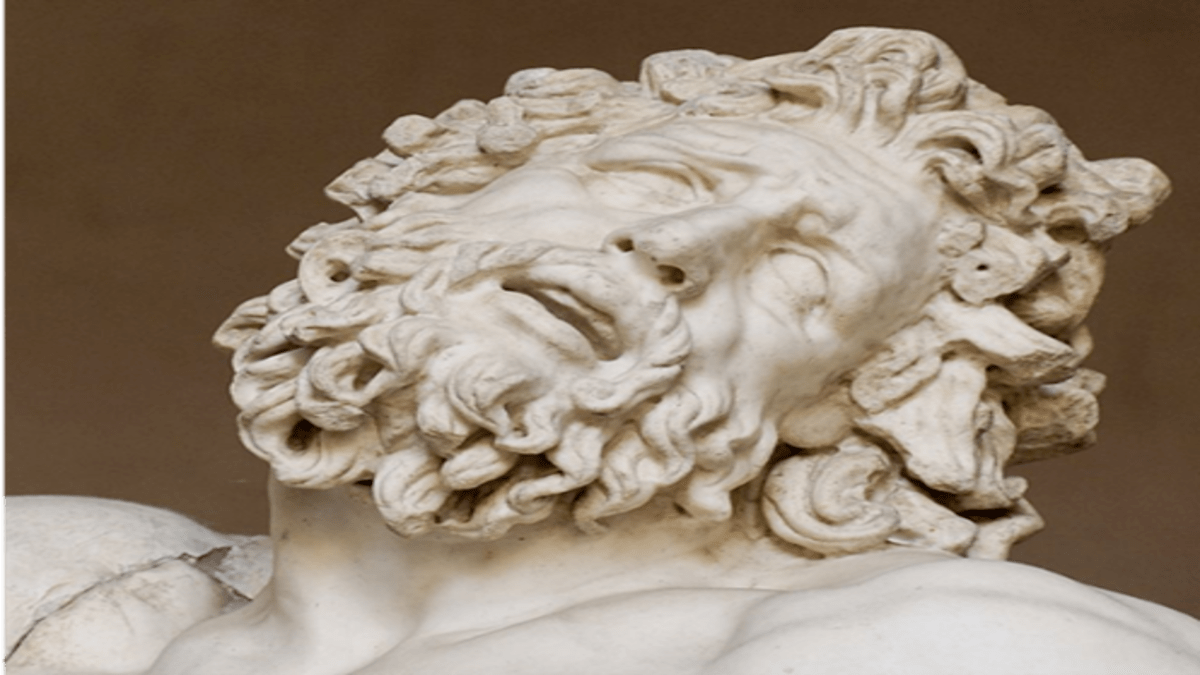
2. Laocoön and His Sons
The statue of Laocoön and His Sons, also called the Laocoön Group, has been one of the most famous ancient sculptures ever since it was excavated in Rome in 1506 and placed on public display in the Vatican. The Laocoön and His Sons statue is made up of White Marble!
Laocoön was a seer and a priest of the god Apollo; he was the son of Agenor of Troy or, according to some, the brother of Anchises (the father of the hero Aeneas). Laocoön offended Apollo by breaking his oath of celibacy and begetting children or by having sexual intercourse with his wife in Apollo’s sanctuary. Thus, while preparing to sacrifice a bull on the altar of the god Poseidon , Laocoön and his twin sons, Antiphas and Thymbraeus (also called Melanthus), were crushed to death by two great sea serpents, Porces and Chariboea, sent by Apollo. A much better-known reason for his punishment was that he had warned the Trojans against accepting the wooden horse left by the Greeks.
3. Bust Of Nefertite
The Nefertiti Bust is a painted stucco-coated limestone bust of Nefertiti, the Great Royal Wife of Egyptian pharaoh Akhenaten. The work is believed to have been crafted in 1345 B.C.E. by Thutmose because it was found in his workshop in Amarna, Egypt. It is one of the most-copied works of ancient Egypt.
The core of the bust consists of limestone, over which a layer of stucco of varying thickness was applied for the final modelling. The consistency of the limestone as well as the thickness and the layer-by-layer application of the stucco were documented in CT scans produced in 2006 in collaboration with the Imaging Science Institute Charité – Siemens. These new scans provided several details not seen in previous images generated in 1992 at the Charité’s Virchow-Klinikum. The paints used here are in keeping with the well-known spectrum of ancient Egyptian natural pigments, including red ochre, yellow orpiment, green frit and carbon black, as well as the artificially produced “Egyptian blue”, applied in a variety of shades, to create the queen’s skin tone, for example. The multi-layered application of the paint was documented with the highest level of accuracy in contact-free tests carried out by the Rathgen-Forschungslabor of the Staatliche Museen zu Berlin in 2009.
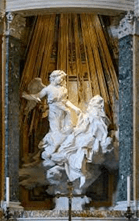
4. Ecstasy of Saint Teresa
The Ecstasy of Saint Teresa is the central sculptural group in white marble set in an elevated aedicule in the Cornaro Chapel, Santa Maria della Vittoria, Rome. It was designed and completed by Gian Lorenzo Bernini .
The Ecstasy of St. Theresa is considered by many as the apogee of Bernini’s oeuvre and is notable for the following qualities, Bernini’s St. Theresa is often described as a gesamtkunstwerk (a German word meaning “total work of art”) for the artist’s incorporation of a variety of elements: sculpture, painting, and lighting effects all presented in a theatrical setting. The Ecstasy of St. Theresa is not just a sculpture, but a total environment. Bernini designed the entire chapel, creating a veritable stage set complete with sculpted audience members.
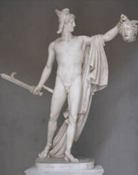
5. Perseus with the head of Medusa
This marble statue shows the Greek demigod Perseus holding the head of Medusa. Perseus is standing in a triumphant pose as he has just beheaded Medusa. He holds the head of Medusa in his left hand by grabbing the venomous snakes on her head. The face of Medusa expresses horror as it has just been cut off. However, you can also still see the beauty of her face.Interestingly, Perseus is looking at her face, even though that should turn him into stone according to the myth (but the irony may be that this actually happened in this statue). Perseus is wearing the sandals of the Roman messenger god Mercury (Hermes in Greek) which allowed Perseus to fly. These sandals were made of gold by the god Vulcan (Hephaestus in Greek). Perseus also wears the cap of Hades, which could make him invisible.
In his right hand, Perseus is holding a harpe sword, which is a sword with a sickle-like extension on one side of the blade. The sword was owned by Zeus, the father of Perseus. A robe hangs loosely over his arm. Notice that his left foot is standing in the front, while the heel of his right foot is lifted. In this way, Canova creates the sense that Perseus is moving forward.
Perseus and Medusa have been a popular subject in art. Famous artists have used their story as the inspiration for their artwork. Leonardo da Vinci created two version of the head of Medusa, but neither of them has survived. Caravaggio has painted the head of Medusa on a shield which is in the Uffizi Museum. Rubens also created two versions of the Head of Medusa, of which one is in the Kunsthistorisches Museum in Vienna. Various sculptures of Perseus and Medusa have also been made, such as one by Benvenuto Cellini.
Written by Mridhula R, Pujakaleeswari N, Avantheka S, Yatheswar, Sukitha, Subiksha Devadharshini S, Thilothika T, Kiruthika S.





 TEAM VARNAM